
Answer Engine Optimisation: The B2B Marketing Game-Changer for 2026

The digital marketing landscape is experiencing its most significant transformation since the birth of Google. Whilst traditional SEO has dominated marketing strategies for decades, a new paradigm is emerging that’s reshaping how B2B buyers discover and evaluate solutions. Welcome to the era of Answer Engine Optimisation (AEO).

The Search Revolution You Can’t Ignore

Picture this: nearly 60% of Google searches now end without a single click. That’s right—over half of all searches result in users getting their answer directly from Google’s AI Overviews without ever visiting a website. Meanwhile, ChatGPT alone boasts 800 million weekly users asking questions and receiving immediate answers, bypassing traditional search results entirely.

For B2B marketers, this isn’t just a trend to monitor—it’s a fundamental shift in buyer behaviour that demands immediate attention. Research from Gartner predicts that by the end of 2026, traditional search engine volume will decline by 25% as AI chatbots and virtual assistants absorb a quarter of organic search traffic.

What Exactly Is Answer Engine Optimisation?

Answer Engine Optimisation is the strategic practice of structuring your digital content so that AI systems can easily discover, understand, and cite your brand as the definitive answer to user queries. Unlike traditional SEO, which focuses on ranking high in search results to drive website clicks, AEO centres on earning placements and citations directly within AI-generated responses across platforms like ChatGPT, Google AI Overviews, Perplexity, Microsoft Copilot, and Claude.

Think of it this way: traditional SEO optimises for the “best page,” whilst AEO optimises for the “best answer.” When a B2B buyer searches for comprehensive information, your entire page needs strong content. But when they ask a specific question like “What are the key differences between cloud-based and on-premise CRM systems?”, AI platforms prioritise content that directly addresses that precise query with clarity and authority.

Why B2B Marketers Must Act Now

The implications for B2B marketing are profound. According to recent research, 94% of B2B buyers now use large language models during their buying journey. This means if your brand isn’t visible in AI-generated answers, you’re losing pipeline opportunities before you can even measure them.

The shift is particularly critical for B2B companies because:

The Zero-Click Reality: Over half of searches now conclude without a click to any website. Your brand needs to be cited within the answer itself to maintain visibility.

Trust and Authority: AI engines prioritise sources they deem trustworthy and authoritative. Securing citations establishes your brand as a thought leader before buyers even reach your website.

Earlier Buyer Engagement: B2B buyers are conducting more research independently before engaging with sales teams. Being present in AI-powered research means influencing decisions at the earliest stages.

Voice Commerce Growth: With voice commerce projected to reach £60 billion globally by 2026, optimising for conversational queries is no longer optional.

The Six Pillars of AEO Success in 2026

Based on analysis of leading B2B companies successfully implementing AEO strategies, six key trends are defining success:

1. Answer-First Content Architecture

Transform your content structure to lead with clear, concise answers. Rather than burying key information deep within lengthy articles, position direct responses to common questions at the beginning of sections. This answer-first approach dramatically increases the likelihood of AI platforms extracting and citing your content.

2. Strategic Schema Implementation

Structured data markup helps AI systems understand the context and meaning of your content. Implement schema markup across priority pages, including FAQ schema, HowTo schema, and Article schema. Companies implementing comprehensive schema strategies report visibility increases of up to 2.5 times in AI-generated responses.

3. Entity Consistency and Authority

AI engines prioritise content from recognised authorities. Ensure your brand, key personnel, and expertise areas are consistently referenced across the web. This includes author credentials, industry affiliations, and mentions in trusted publications. The goal is to establish clear entity relationships that AI systems recognise and trust.

4. Multi-Format Content Optimisation

AI platforms increasingly pull from diverse content formats beyond text. Transcribed video content, podcast episode summaries, and infographic data all contribute to your AEO footprint. Research shows YouTube citations demonstrate the strongest correlation with visibility across ChatGPT, Google AI Mode, and AI Overviews.

5. Conversational Query Alignment

Voice searches and chatbot queries tend to be longer and more conversational than traditional text searches. Optimise content for natural language patterns, typically seven to ten words, that reflect how people actually speak. Questions like “How can we reduce customer churn in our SaaS business?” rather than keywords like “SaaS churn reduction.”

6. Local AEO Positioning

For B2B service providers, local optimisation within answer engines is becoming increasingly valuable. AI assistants are personalising answers by region, drawing from content that clearly communicates location, service availability, and geographical expertise.

Practical Steps to Launch Your AEO Strategy

Ready to position your B2B brand for the AI-powered search future? Here’s how to begin:

Audit Your Current AI Visibility: Use tools like HubSpot’s AI Search Grader to assess where your brand currently appears (or doesn’t) in AI-generated responses. This baseline helps prioritise optimisation efforts.

Identify High-Value Questions: Map the critical questions your target buyers ask during their research phase. Focus on queries where providing definitive answers would position your brand as the authority.

Restructure Priority Content: Select your best-performing content pieces and reformat them with answer-first structures, clear headings, and concise responses. Add relevant schema markup to help AI systems parse the information.

Build Your Citation Network: Develop relationships with industry publications, contribute expert commentary, and create original research that others will reference. Citations from trusted sources significantly boost your AEO performance.

Track Citations, Not Just Traffic: Traditional metrics like page views become less relevant in a zero-click world. Monitor brand mentions, citation frequency, and share-of-voice within AI-generated answers instead.

Maintain Freshness: AI systems favour current, regularly updated content. Establish a quarterly review process to refresh statistics, examples, and positioning in your most important pages.

The Balancing Act: AEO and SEO Working Together

Here’s the crucial insight: AEO doesn’t replace traditional SEO—it expands it. Strong foundational SEO ensures your content is discoverable in the first place. Most AI platforms use existing search indexes as sources, meaning good SEO gets your content into consideration whilst AEO ensures it gets cited.

The winning strategy integrates both approaches. Maintain your SEO fundamentals—quality content, strong backlinks, technical optimisation—whilst layering on AEO-specific tactics like answer-ready formatting, comprehensive schema, and conversational query alignment.

The Competitive Advantage Window Is Closing

Data from early AEO adopters reveals a stark reality: brands implementing answer engine optimisation strategies now capture 3.4 times more visibility than late adopters. As more companies recognise AEO’s importance, this first-mover advantage will diminish.

The B2B companies that will dominate their categories in 2026 and beyond aren’t waiting to see how the AI search landscape evolves. They’re actively shaping their presence within it, ensuring that when buyers turn to ChatGPT, Perplexity, or Google’s AI Overviews with questions, their brand emerges as the trusted, cited answer.

The Future Is Already Here

The transformation of search through AI isn’t a distant possibility—it’s the present reality that’s accelerating rapidly. B2B buyers have already shifted their research behaviours, increasingly relying on AI-powered tools to inform their decisions. The question isn’t whether your brand should optimise for answer engines, but how quickly you can implement a comprehensive AEO strategy before your competitors establish dominance.

Traditional SEO focused on being found. Answer Engine Optimisation ensures you’re chosen. In 2026, that distinction will determine which B2B brands lead their markets and which become invisible to the fastest-growing segment of potential buyers.

The opportunity is clear, the data is compelling, and the window for competitive advantage is open. The only question that remains is: will your brand be the answer?


Ready to future-proof your B2B marketing strategy with Answer Engine Optimisation? Our team specialises in helping UK businesses establish authority and visibility across AI-powered search platforms. Get in touch today to discover how AEO can transform your digital marketing results.

The Hidden Costs of Convenience: Drawbacks of Using Online Distribution Systems Like Booking.com or Airbnb

Stress of using Online Distribution Systems

For many business owners in the hospitality industry, online distribution platforms like Booking.com and Airbnb seem like a no-brainer. These platforms promise to increase visibility, attract a wider audience, and simplify bookings. However, as enticing as these benefits may be, they come with a set of significant drawbacks that often go unnoticed until they start to impact your bottom line or overall operations. Let’s dive into some of the key challenges business owners face when relying heavily on these platforms.


1. High Commission Fees Eat Into Profits

One of the biggest downsides to using platforms like Booking.com is the steep commission fees. For every booking made, these platforms charge a percentage, often ranging between 10% and 25%. For small businesses, this can quickly add up, eroding profit margins. What may seem like an affordable customer acquisition cost at first can snowball into a significant expense, especially if the majority of your bookings come through these travel platforms.


2. Loss of Direct Customer Relationships

When guests book through an intermediary like Airbnb, the direct relationship between the host and the customer is weakened. Platforms control most of the communication and customer data, leaving businesses with limited insights into their audience. This lack of control makes it harder to build loyalty, upsell services, or re-engage guests directly for future stays.


3. Over-Reliance on Third-Party Platforms

Many businesses become overly dependent on online travel agencies (OTAs) for bookings. While these platforms can be a reliable source of customers, this dependency poses risks. Changes in algorithms, policy updates, or increased competition within the platform can significantly impact your visibility and booking rates. If the platform experiences technical issues or market shifts, your business could suffer.


4. Pricing Constraints and Rate Parity Agreements

OTAs often require rate parity, meaning you can’t offer lower prices on your own website or other platforms. This restricts your ability to use competitive pricing strategies and incentives to drive direct bookings. Additionally, platforms frequently run promotions or discounts that affect your listing, sometimes without your explicit consent, potentially impacting your brand image and perceived value.


5. Reputation and Review Management Challenges

While reviews are critical for building trust, platforms like Airbnb and Booking.com often centralise control over your business’s reputation. Negative reviews, even if unwarranted, can significantly harm your listing’s ranking and visibility. Moreover, the process for disputing or addressing unfair reviews is often cumbersome, leaving business owners frustrated and powerless.


6. Lack of Customisation and Branding

Online distribution platforms limit how businesses can showcase their unique identity. Listings follow a standardised format, which can make it hard to stand out from competitors. You’re confined to the platform’s design, layout, and features, making it nearly impossible to fully communicate your brand story or create a memorable customer experience.


7. Increasing Competition

As these platforms grow, so does competition. For example, Airbnb now features not only individual hosts but also professional property managers and boutique hotels. The increased supply of listings can dilute your visibility, making it harder to attract bookings without investing in paid promotions or higher commissions.


8. Policy Changes Without Warning

OTAs frequently update their terms of service, cancellation policies, or commission structures. These changes can directly impact your business operations or profitability. For example, during the COVID-19 pandemic, many platforms implemented customer-centric refund policies without consulting hosts, leaving business owners to absorb the financial losses.


9. Limited Control Over Guest Behavior

Platforms often prioritise guest satisfaction, sometimes at the expense of hosts. This can result in disputes or costs that the platform may resolve in the guest’s favour, regardless of circumstances. Airbnb, for instance, has been criticised for leniency toward guests who cause property damage or violate house rules.


10. Data Ownership and Insights

Data is one of the most valuable assets for any business. Unfortunately, platforms like Booking.com and Airbnb retain most of the customer data, leaving you with limited access to insights about your audience. This lack of data hampers your ability to understand customer preferences, improve services, and tailor marketing efforts.


Conclusion: A Balanced Approach Is Key

While platforms like Booking.com and Airbnb can be valuable tools for generating bookings, it’s essential for business owners to understand their limitations. Diversifying your distribution strategy is crucial to reduce dependency on these platforms. Invest in building a strong direct booking channel through your own website, optimise your SEO and digital marketing efforts, and cultivate a loyal customer base.

Ultimately, these platforms should supplement your business strategy, not define it. By striking the right balance, you can leverage their reach while maintaining control over your brand, profitability, and customer relationships.

Kent Household Income by Local Authority District

The Kent Economy and Household Income

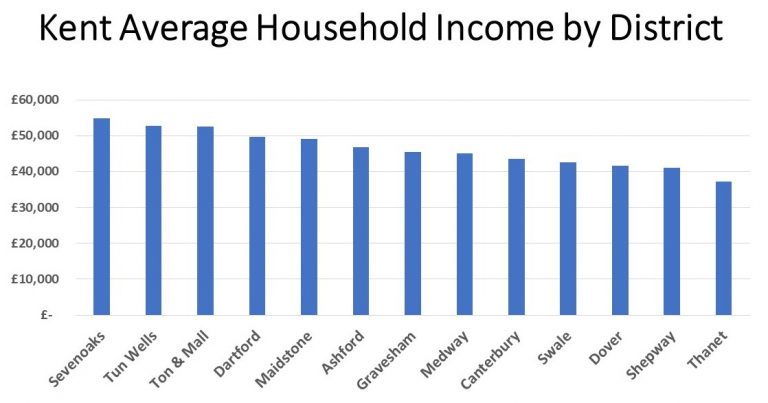
Simply Clicks is based in Kent. We also have a number of clients based in Kent. Our economic knowledge and years of experience serving Kent clients have taught us that the geography of Kent has major implications for the success of any Kent-focused SEO or Kent-focused PPC marketing activity. The specific implication depends on the nature of the product or service and its market structure. However, one overriding feature of the Kent economy is how household income changes as you move away from London. The parts of Kent closest to the centre of London tend to be more affluent. Conversely, locations further away tend to be less affluent. This “distance” can be measured in miles or commute time. For example, if you look at the table below, you will notice the position of Ashford. Ashford is further from London but ranks above Gravesham and Medway. The reason being the effect of Ashford’s high speed rail connection.


Kent Household Income by District
Kent Household Income by District - Source ONS

A More affluent northwest Kent a less affluent south and east Kent

Anyone with a cursory knowledge of Kent geography will realise that by looking at the chart above that the places nearest to London tend to occupy the upper end of the income scales and those places further away, tend to occupy the lower end.

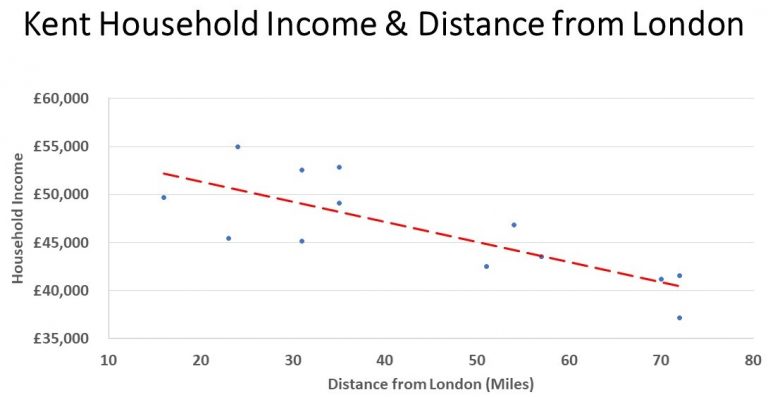
The chart below shows this relationship on the basis of miles from central London. The data being taken from Google Maps. Each district is plotted on two axes. The Y axis showing average household income and the X axis showing distance from London. A red dotted line shows a line of best fit, which correlates at 80% with the distance

Attractiveness

There is some variation, with certain districts appearing above this line and others below. Towns shown above the line of best fit have positive attractiveness. Excluding the effect of rail commute times, there must be another factor at play. My own view, is that this variation is caused by the relative attractiveness of the towns involved. Towns above the line of best fit have positive attractiveness. Towns below the line, have negative attractiveness. Attractive towns, such as Tunbridge Wells, may attract higher income families. Whilst less attractive towns may well deter them. Attractiveness could be determined by the reputation of schools, the type of shops or access to recreational faclities. In monetary terms, what counts as “attractive” is determined by current and potential residents of each town.

Kent Household Income and Distance from London

Implications of Household Incomes

This variation in household income presents implications for marketers. If you are marketing luxury goods, you would typically target the more affluent towns. Likewise, if you had the responsibility for retail store location, you would seek to match your store locations to the socio-demographic and income profile of their catchment.

I have several examples of search marketing projects where tailoring search activity to this model has produced outstanding results. If you would like to discuss, please contact us.

Why A Kent Company Should Use A Kent PPC Agency

Kent Marketing Map - Major Towns
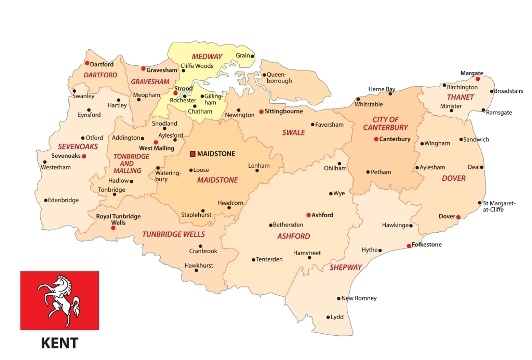
Kent Major Towns and Villages

When it comes to managing a local PPC campaign, hiring a Kent PPC agency should be the preferred option for Kent-based companies.

In this article, we discuss the advantages of working with a local agency and why it can be the perfect solution for your business. From local market knowledge to more effective targeting, partnering with a Kent PPC agency can help optimise your digital advertising efforts and drive optimum results.
Givens – Regardless of location every PPC agency should have the following attributes:

  • The knowledge of how PPC systems such as Google Ads work
  • Understand the importance of tracking and measuring performance
  • Be able to adapt their campaigns to performance feedback, the unfolding market and the changing needs of the business.

For a Kent-based paid search campaign, a Kent PPC agency should have a deeper knowledge of the Kent economy, markets, companies and consumers than an agency located in London, or elsewhere within the UK. If an agency has worked with several Kent companies, then this market knowledge will develop over time.

The Kent Economy

The Kent economy has many facets. The county has traditionally been referred to as the Garden of England – Due mainly to agricultural produce supplied to London and beyond. At the same time, its proximity to the European mainland has seen the development of the transport, logistics and shipping industries. In the technology sector, Kent plays a major role in the UK’s biopharmaceutical industry. With key locations in Thanet, Swale and Dartford.

Kent Tourism

Kent has a tremendous tourism market. Ancient cathedrals and castles in places such as Rochester, Canterbury and Dover. A large number of National Trust properties. Plus, a range of boutique and upmarket country hotels and the largest share of gastro-pubs of any county in the UK.
Towns such as Whitstable, famous for oysters, and Ramsgate, famous for the country’s largest Wetherspoons pub, attract large numbers of weekend visitors looking for a seaside experience. But those visitors have very different socio-demographics, with very different needs.

Kent Sports and Leisure

Kent is famous for its cricket. But what sets it apart, given its coast, are some of the finest golf courses in the world. Led of course by Royal St. George’s at Sandwich, which hosts the Open Championship on a 10-year cycle.

The Kent Housing Market

The type and value of housing determines consumer behaviour. Expensive houses need expensive mortgages. Established housing tends to house older people. New estates, younger couples. Kent has one of the largest house building programmes of any UK county. However, this activity varies within the geography of the county. Ashford tends to build lots of 4+ bed detached houses for families, whereas Dartford, being closer to London, prioritises flats. If you are marketing to people to owners of upmarket country houses, then the areas around Tunbridge Wells and Sevenoaks will provide the most fertile ground. Even within individual Kent towns, the type of housing stock varies widely.

Kent Manufacturing

Manufacturing and distribution trades tend to follow the motorway network, with Medway the manufacturing powerhouse, with its links to the Royal Navy. In the current era of global political turbulence, one of the UK’s largest defence manufacturers, BAE Systems, has hi-tech manufacturing at Rochester.

Kent Professional Services

Maidstone being the County town, with the headquarters of Kent County Council, tends to attract a disproportionate share of professional services such as lawyers and accountants.

Kent Retail

Dartford has Bluewater one of the largest shopping centres in the south of England. Ashford has the McArthur Glen designer outlet centre. Thanet has the Westgate Centre. Whilst Canterbury, Faversham, Deal and Tunbridge Wells all have an excellent range of independent shops. Retail is a rapidly changing market and managing the interaction between a company’s online sales and its bricks and mortar offering is crucial.

Location and Proximity

Proximity brings benefits. If you can regularly meet face-to-face for agency/client discussions, the quality of the interaction will be improved. The agency will get a deeper understanding of client strategy and operations. The client will gain a deeper understanding of the range of opportunities offered by digital marketing.

Google Business Profile

When it comes to local search – SEO or PPC – A company’s Google Business Profile plays a key role. The local search engine results page (SERPS) will show a variety of results. Sponsored results, organic results and map results. Knowledge of Kent areas, even down to postcode level, is crucial. A city such as Canterbury has the CT1 postcode at its centre. However, Medway a unitary authority with a population of 300,000 plus, utilises an ME, or Maidstone, postcode. Indeed, many Medway searches utilise the individual Medway towns of Gillingham, Chatham, Rochester and Strood rather than using Medway as the location.

In Conclusion

Kent is a county of almost 2 million people. A population larger than Northern Ireland. More than half the population of Wales and a third of the population of Scotland. After London, Kent often has the second largest number of UK geographic searches on Google. Rivalling bigger counties such as Yorkshire and cities such as Manchester. The nuances of local markets within Kent, however, are important. I suggest, only a PPC agency based in Kent can provide the optimum service for a company located in Kent.

The Decline of Keyword Density In SEO Importance

Exploring the Myth of Keyword Density

Why Keyword Density Is Not Relevant For SEO

In the ever-evolving realm of SEO, one term that has garnered both attention and confusion is “keyword density.” Let’s unravel the intricacies surrounding this concept and understand why it’s time to reevaluate its significance in your content strategy.

The Evolution of SEO Practices

In the digital landscape’s early days, keyword density was deemed a crucial metric for search engine optimization. Marketers believed that saturating content with keywords would catapult it to the top of search results. However, the SEO landscape has undergone a paradigm shift.

Breaking Down the Myth

Quality Over Quantity

Modern SEO emphasizes the quality of content rather than fixating on keyword density. Search engines have become smarter, prioritizing user experience and relevant, valuable content. Focusing solely on keyword density neglects the essence of providing value to your audience.

Semantic Search Dominance

Search engines now employ semantic search algorithms, deciphering the context and intent behind user queries. This renders the traditional keyword-focused approach less effective. Crafting content that aligns with user intent takes precedence over arbitrary keyword inclusion.

The Pitfalls of Keyword Density Obsession

Stilted and Unnatural Content

Excessive emphasis on keyword density often results in stilted, unnatural prose. Readers can discern forced keyword integration, diminishing the overall user experience. Engaging content that flows naturally holds more weight in today’s SEO landscape.

Risk of Keyword Stuffing Penalties

Search engines penalize websites engaging in keyword stuffing – the practice of overloading content with keywords. Such penalties can adversely impact your site’s ranking and credibility. A strategic, balanced approach to keyword usage is now the key to success.

Embracing a Holistic SEO Approach

Content Relevance and Authority

Shift your focus from keyword density to content relevance and authority. Crafting comprehensive, well-researched content establishes your website as an authoritative source. This, in turn, boosts your search engine ranking.

User-Focused Optimisation

Prioritize optimizing for the user rather than search engines alone. User engagement metrics, such as bounce rate and time spent on page, carry substantial weight in modern SEO algorithms. Tailoring content to meet user expectations ensures sustained organic traffic.

Conclusion: A Paradigm Shift in SEO Mindset

In conclusion, the era of fixating on keyword density has waned. Embrace a holistic approach that prioritises quality, relevance, and user satisfaction. By understanding and adapting to the evolving SEO landscape, your content can rise above the noise and secure a prominent place in search engine results.

My recommendation is that you should unlock the true potential of your content by focusing on what matters – relevance, quality, and user experience. Bid farewell to the myth of keyword density and usher in a new era of SEO success.

Use PPC to get your Kent business noticed nationally

Map for Kent PPC post

We often work with clients that are based in Kent that have a good level of local business but also operate outside of the county. In this post we’ll talk about how PPC has helped grow business outside of local.

Intro to local search

Google’s algorithm continues to adapt and change as the internet and economies continue to grow. In 2012, they launched Google+ Local and in 2014 rebranded to Google my business. The idea behind it was to make it easier for businesses to engage with customers at a local level. At the same time, it made it more difficult to engage at a national level. I’m sure in the coming months, we’ll have another post on local search. It’s certainly worth setting up!

So what can you do to get noticed nationally? PPC?

In short, the same thing you do to get noticed with anything on Google search results – PPC. We help target national search terms and always keep the scope as refined as possible. It’s easy to fall in the trap of targeting too broad a customer and spending too much on “general” search terms. We find the more focused the keyword, the better the results. It’s a big part of how we deliver the best value for our clients.

Why focused search terms?

The Google Adwords bidding system will always try and broaden the search results for the intended keywords. Initially you might think that’s a good thing. But often it’s showing your advert to a loosely linked customer. We do our best to avoid this and like aiming for quality not quantity.

Hotel SEO and PPC

Hotel Hospitality SEO and PPC

We have been building the online visibility of hotels since 2005. From independently-owned boutique hotels to luxury international chains.